
Have you ever scrolled through your WhatsApp chats or Instagram DMs and paused at a two-letter acronym that left you completely puzzled? Modern internet text language moves at lightning speed, blending English shorthand with localized expressions.
When Pakistani internet users encounter this phrase, they frequently search for the exact “tf meaning in urdu” to avoid awkward social mix-ups. This guide unpacks everything you need to know about this highly popular internet acronym, its cultural context, and how it translates into everyday Urdu speech.
Why Everyone is Searching for the True Meaning of TF
Digital communication has completely changed how we express deep emotions like shock, surprise, or anger. Instead of typing out long sentences, younger generations use quick, punchy acronyms to mimic real-life tone of voice.
People search for this specific phrase online because text messages lack facial expressions. A simple term can sound intensely aggressive or lightheartedly funny depending entirely on the context. Bilingual speakers want to know exactly how this internet slang maps onto native Urdu emotions to ensure they never misunderstand their close friends.
Solving this text-based confusion helps close the generational and cultural gap. It allows everyone to communicate naturally without feeling left out of modern, fast-paced conversations.
TF Meaning in Urdu – A Quick and Clear Breakdown
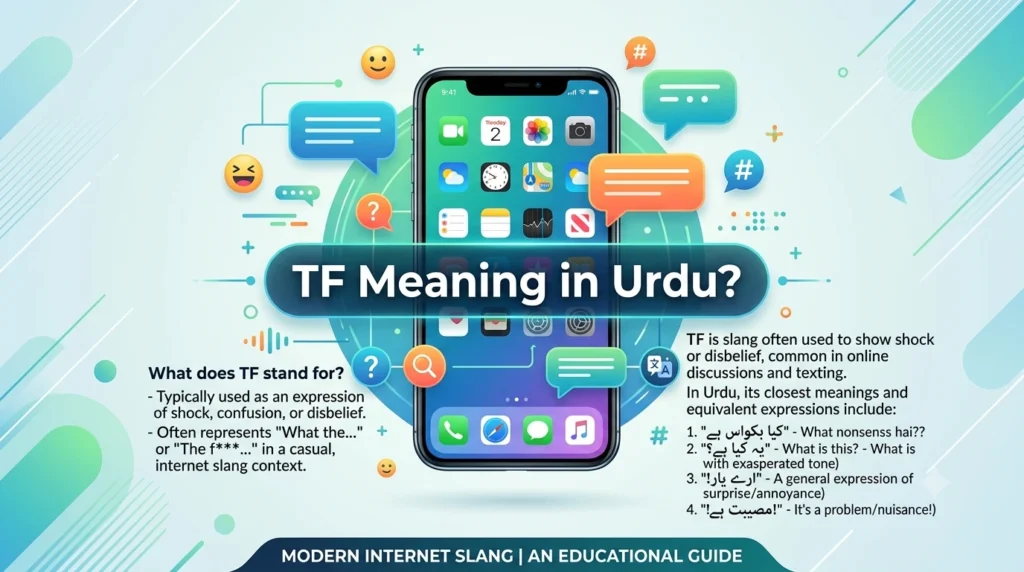
At its core, TF stands for “The F*”. It functions as an emphatic, highly intense exclamation used online to show absolute disbelief, deep confusion, or sudden frustration.
When we translate the core emotional energy of this acronym into Urdu, it maps onto several familiar everyday spoken expressions:
- کیا بکواس ہے؟ (Kya bakwas hai?) – What nonsense!
- یہ کیا مصیبت ہے؟ (Yeh kya museebat hai?) – What on earth is this?
- یہ کیا چل رہا ہے؟ (Yeh kya chal raha hai?) – What in the world is happening?
- ارے یار، یہ کیا ہے؟ (Aray yaar, yeh kya hai?) – Oh man, what is this?
Real-World Text Examples:
“TF are you even talking about right now?”
(Urdu context: تم اب کس بکواس کے بارے میں بات کر رہے ہو؟)
“TF just happened to my phone screen?!”
(Urdu context: میرے فون کی اسکرین کو اچانک یہ کیا مصیبت ہو گئی ہے؟!)
The Origin and Evolution of Modern Text Slang
From Early Chatrooms to Global Smartphones
This phrase emerged during the late 1990s and early 2000s when internet relay chatrooms and SMS text messaging had strict character limits. People needed a way to express heavy frustration instantly without typing full curse words. Over the years, the internet stripped away the purely aggressive nature of the phrase, turning it into a universal marker for pure shock.
The Massive Social Media Shift
With the explosive growth of TikTok, Instagram Reels, and meme culture, this acronym transformed into a mainstream conversational tool. In Pakistan, bilingual internet users seamlessly blended it into their Roman Urdu typing habits. Today, it acts as a quick emotional punctuation mark used by millions of young adults across the country every single day.
Real-Life Conversations: How It Looks in Your DMs
Scenario 1: A Shocked WhatsApp Chat Between Friends
Person A: Bro, did you hear? Our final university exam got preponed to tomorrow morning!
Person B: TF?! Are you serious right now? I haven’t even opened the book yet!
Scenario 2: An Instagram DM Reacting to News
Person A: Check out this video link, someone stole a car in broad daylight in our neighborhood.
Person B: TF… security guards were literally standing right there on the street corner.
Scenario 3: A Relatable TikTok Comment Section
Person A: Posts a video cooking biryani with chocolate syrup.
Person B: TF did I just witness? Please delete this video immediately, you ruined my appetite!
Scenario 4: A Frustrated Late-Night Text Message
Person A: The electricity just went out again for the third time tonight.
Person B: TF is wrong with the power grid today, it is freezing cold outside!
The Emotional and Psychological Depth Behind the Text
Using this acronym reveals how much we crave immediate emotional validation in digital spaces. Because we cannot yell, gasp, or widen our eyes over a text screen, this short abbreviation serves as a vital psychological proxy for intense human emotion.
It shows that modern communication values speed, intense vulnerability, and conversational intimacy. When someone sends this acronym to you, it usually indicates they feel comfortable enough around you to drop formal language filters completely.
A Quick Personal Insight from Experience
During a frantic group project last semester, a classmate suddenly texted our group chat: “TF happened to the master slide deck?” Half the team panicked, thinking he was furious. When we hopped on a voice call, he laughed and explained he was just deeply shocked by a strange formatting error. That moment taught me how easily digital text can distort our true human feelings.
How the Text Changes Meanings Across Different Settings
Social Media Feeds
On public timelines, the acronym behaves like a megaphone for public shock.
Friends and Close Relationships
Within your inner social circle, it represents absolute comfort and deep trust. It serves as a casual way to banter, mock ridiculous situations, or express deep sympathy when a close friend shares bad news.
Work and Professional Environments
This is where you must exercise extreme caution. Sending this phrase to a supervisor, official client, or university professor is highly inappropriate and unprofessional. It signals a severe lack of respect and decorum.
Casual vs. Serious Tones
In a casual setting, it brings a humorous punch to your sentences. However, if sent during a heated argument, it instantly escalates tension, making the other person feel attacked or judged.
Crucial Moments When You Should Never Use This Acronym
You must completely avoid this phrase in formal, traditional, or highly sensitive situations. For instance, using it while discussing serious family matters with older relatives will likely cause deep offense, as elders view the root words as incredibly disrespectful.
Cultural sensitivity matters immensely in our daily lives. If you are communicating with someone who prefers polite, formal Urdu or English, this acronym can easily paint you as rude, immature, or aggressive. Always match your language to the comfort level of the person receiving your message.
Common Misunderstandings and Pitfalls to Avoid
The most frequent mistake people make is taking the acronym completely literally. Many users assume the sender is actively swearing at them in a fit of rage, whereas the sender is simply expressing lighthearted shock.
This severe tone confusion creates unnecessary digital drama. Understanding the subtle line between a figurative expression of surprise and a literal insult is the secret to smooth online communication.
Ultimate Slang Comparison Matrix
The table below outlines how this specific term stacks up against other popular internet expressions you encounter daily:
Key Insight
While all these terms dominate our daily screens, they possess unique emotional boundaries that alter the entire mood of a digital conversation.
10 Variations of TF and What They Actually Mean
1. WTF (What The F*)
Meaning: The original, highly intense version used for absolute, unfiltered outrage.
2. WTFis (What The F* Is)
Meaning: Used when encountering a bizarre object or concept for the very first time.
3. TFISTHAT (TF Is That)
Meaning: A rapid-fire reaction to seeing something incredibly strange or unsettling.
4. TFW (That Feeling When)
Meaning: Completely unrelated to shock; this highlights a specific relatable emotional situation.
5. TFTI (Thanks For The Invitation)
Meaning: A sarcastic remark used when friends hang out without inviting you.
6. TBM (Truth Be Told)
Meaning: Expressing your absolute, honest opinion on a touchy subject.
7. TBF (To Be Fair)
Meaning: Introducing a reasonable counter-argument during an active debate.
8. TFY (Good For You)
Meaning: A text variation often used to show casual or sarcastic encouragement.
9. TFM (Text From Myself)
Meaning: Used when someone accidentally sends a message to their own chat window.
10. BTFO (Blown The F* Out)
Meaning: Used when someone loses an argument completely or gets soundly defeated.
How to Respond Perfectly When Someone Sends It to You
Casual and Friendly Replies
- “Haha, my thoughts exactly, bro.”
Funny and Witty Retorts
- “Don’t lose your mind just yet, save some drama for tomorrow!”
- “Take a deep breath, it’s not the end of the world!”
Mature and Balanced Answers
- “Let’s stay calm and look at the actual facts before panicking.”
- “I understand your frustration, let’s resolve this smoothly.”
Respectful and Polite Responses
- “My apologies, I did not mean to cause any confusion.”
- “Let me explain what happened in a clearer way.”
Regional, Cultural, and Generational Differences
Western Digital Spaces
In Western nations, this acronym is integrated into standard casual language. It rarely shocks anyone, appearing frequently in mainstream casual text exchanges without causing major drama.
South Asian and Middle Eastern Circles
In regions like Pakistan, the term carries a unique double life. While younger, tech-savvy individuals use it constantly, traditional communities find the underlying English swear word deeply inappropriate when spoken aloud.
Gen Z vs. Millennials
Gen Z treats the acronym as an everyday punctuation mark, often stripping it of any real anger. Millennials, however, tend to use it more sparingly, reserving it for moments of genuine, actual frustration. To explore how other names and terms shift across cultures, you can check out unique naming trends over at Name Meaning Zone.
Is This Text Term Safe For Kids?
Parents should keep a close eye on this expression. While the acronym appears harmless on the surface, the core phrase it represents contains explicit language.
Encouraging younger children to swap out this intense slang for cleaner expressions like “What the heck” or “Oh my god” keeps their digital vocabulary polite, positive, and safe for all audiences. For more detailed insights into language and safe digital expressions, a helpful guide can be found on the Cambridge Dictionary Slang Section.
Frequently Asked Questions
Is TF a bad word to use in everyday Urdu chats?
It depends on who you are texting. While close friends view it as a harmless expression of shock, conservative individuals or elders may find it highly offensive due to its vulgar root words.
Can I use TF in a formal business email?
Absolutely not. Using internet acronyms in professional settings damages your workplace credibility and looks incredibly unprofessional to clients.
Does TF always mean something angry?
No, it is very frequently used to express positive shock, extreme confusion, or lighthearted amusement at a hilarious meme.
What is the main difference between TF and WTF?
WTF is much more explicit and aggressive. TF is a slightly softer, faster variation used for quick text reactions.
How do older Pakistani parents view this slang?
Most older parents are completely unaware of its digital meaning, but if they discover the explicit English root words, they will generally disapprove of its usage.
Final Thoughts on Navigating Modern Internet Slang
Mastering online shorthand is all about understanding context, emotional timing, and respect. This popular acronym is a fantastic tool for adding color and intense emotion to your daily chats, provided you keep it within your close social circles.
As you navigate various digital spaces, always aim to balance modern trends with cultural empathy. Keep your text conversations lively, stay mindful of who is reading your messages, and use your digital vocabulary with absolute confidence!