
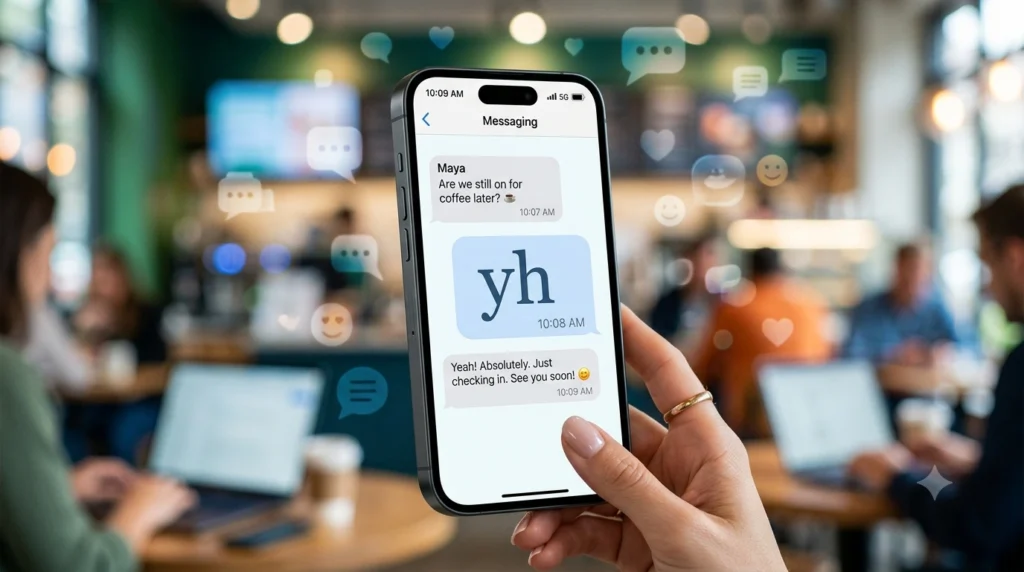
We have all been there. You are scrolling through your messages, having a fast-paced conversation, and someone drops a simple, two-letter response: “yh”.
If you didn’t grow up with a smartphone permanently attached to your hand, or if you simply miss the days when people spelled out full sentences, this can stop you right in your tracks. Is it a typo? Is it an acronym for a complex corporate phrase? Or is it just a lazy way of saying something incredibly basic?
People search for the meaning of this term because digital shorthand moves at lightning speed. Missing the context of a tiny acronym can completely change the vibe of a conversation.
This guide clears up the confusion surrounding this ultra-popular text abbreviation. We will dive into its hidden emotional weight, look at real-world examples, and help you master using it without looking out of touch.
What Does YH Mean?
At its absolute core, YH is the ultimate digital shortcut for the word “Yeah” or “Yes”.
It is a phonetic abbreviation, meaning it strips out the vowels to leave behind the core consonants that give the word its shape. Instead of typing four letters, modern texters compress it down to just two. It serves as a rapid-fire confirmation, a digital nod of the head that keeps the momentum of a chat moving forward without a single wasted second.
The Quick Definition
In the fast-evolving world of internet slang, this term is used exclusively to show agreement, validation, or acknowledgement. It is the virtual equivalent of humming in approval while someone else is speaking.
Here is how it looks in action:
“Are we still meeting up at the cafe at five?”
“Yh, see you there!”“That exam was way harder than expected.”
“Yh ngl I barely passed.”“Did you finish the update?”
“Yh done.”
Origin and Background
The roots of this abbreviation trace back to the early days of mobile communication, long before unlimited data plans and touchscreen keyboards existed.
The Days of SMS and T9 Predictive Text
Back in the late 1990s and early 2000s, character limits on standard SMS text messages were strictly capped at 160 characters. If you went over that limit, you were charged double by your mobile network provider.
To save money and space, mobile users began aggressively cutting out vowels from everyday words. Typing on a physical T9 numeric keypad was a slow, deliberate process. Shaving two letters off the word “yeah” felt like a massive win for efficiency.
The Evolution of the Digital Nod
As messaging apps like WhatsApp, Snapchat, and Instagram DMs took over global communication, the character limit restriction vanished. However, the habit of using shorthand remained deeply ingrained in text culture.
The term transitioned from a structural necessity into a stylistic choice. It evolved from a clunky shortcut into a smooth, effortless marker of casual, high-speed connection.
Real-Life Conversations
To truly understand how this slang functions in daily life, it helps to see how it flows naturally across different digital platforms. Notice how the tone shifts depending on the app being used.
WhatsApp Message
Person A: Hey, did you remember to lock the front door when you left the house?
Person B: Yh I made sure to double-check it this time. No worries!
Instagram DM
max : That new sneakers drop
Person B: Yh honestly the colorway is perfect. Let’s see if we can win the raffle.
TikTok Comment Section
Person A: This creator literally never misses with these recipes.
Person B: Yh facts, I made the pasta last night and it was a 10/10.
Standard Text Message
Person A: Are you on your way to the stadium yet? The game starts in twenty minutes.
Person B: Yh stuck in a bit of traffic but I should be there right on time.
Emotional and Psychological Meaning
Texting lacks facial expressions, body language, and vocal inflections. Because of this, even a tiny two-letter word carries a surprising amount of psychological weight and emotional nuance.
The Spectrum of Agreement
When someone sends this shortcut, they are choosing a specific level of emotional investment. It sits comfortably between the cold, borderline-aggressive finality of a single capital “K” and the enthusiastic, high-energy warmth of “Omg yes!”
It signals that the sender is present, agreeing, and keeping the conversation casual. There is an unspoken sense of comfort implied here; you typically do not use this shorthand with someone you are trying to deeply impress with your professionalism.
A Personal Scenario from the Field
As an educator who spends hours analyzing how younger generations communicate online, I remember a specific chat with a student who was working on an essay assignment. I sent a long, detailed feedback paragraph explaining how to restructure their thesis statement.
The response I received was a simple, lowercase: “yh thanks.”
At first glance, an old-school grammarian might view this as dismissive or disrespectful. However, looking at it through a modern communication lens, it actually signaled a relaxed, comfortable dynamic. The student wasn’t being rude; they were acknowledging the advice instantly in their native digital tongue, prioritizing speed and connection over formal stiffness.
Usage in Different Contexts
Context is absolutely everything when it comes to digital slang. Using the right abbreviation in the wrong setting can completely derail your intended message.
Social Media Spaces
On platforms like TikTok, X, and Instagram, this abbreviation is used with absolute freedom. It is perfect for fast engagement in comment sections, quick reactions to viral memes, and rapid banter in group chats where sentences need to fly fast.
Friends and Intimate Relationships
Among close friends or romantic partners, the term acts as a comfortable security blanket. It implies a high level of closeness. You don’t feel the need to dress up your language or use perfect punctuation because you already understand each other perfectly.
Professional and Work Settings
This is where you must exercise extreme caution. Sending this shortcut to your corporate manager, a primary stakeholder, or an external client is generally a bad idea. It can easily be misconstrued as lazy, unprofessional, or lazy. In professional ecosystems, stick to traditional terms like “Yes,” “Absolutely,” or “Confirmed.”
Casual vs. Serious Tones
The slang thrives in casual, low-stakes environments. If a friend messages you about something deeply serious or emotionally painful, replying with a quick shortcut can feel incredibly dismissive. Reserve it for lighthearted, everyday logistical chats.
When NOT to Use It
Knowing when to pull back on your slang usage is just as crucial as knowing what the words mean in the first place.
High-Stakes Situations
If you are apologizing for a major mistake, discussing financial matters, or navigating a fragile emotional conflict, avoid this shortcut entirely. It lacks the gravitas required for meaningful conversations.
Cultural and Professional Blind Spots
When communicating with older generations or individuals from backgrounds where English internet slang isn’t common, this term will cause unnecessary confusion. If your recipient has to head to an external search engine to decode your text, the efficiency of the shortcut is entirely lost.
Common Misunderstandings
Because this abbreviation looks like a few other terms, it occasionally leads to digital mix-ups.
The Typography Mix-up
Some users occasionally confuse it with the exclamation “Yeehaw” or mistakenly think it is a broken acronym for something like “Your Highness.”
In rare instances, older individuals might confuse it with the historical, religious tetragrammaton (YHWH), creating highly bizarre conversational misunderstandings.
Literal vs. Figurative Nuance
Sometimes, a person might send this slang not because they actually agree with your point, but simply to end a tedious conversation. Recognizing whether it means “I totally agree” or “Please stop talking to me” requires looking closely at how fast they are replying and the context of the chat.
Comparison Table
To help you visualize where this term sits in the grand hierarchy of digital agreement, here is a quick comparative breakdown.
| Slang Term | Full Meaning | Tone / Energy Level | Best Used For |
|---|---|---|---|
| Yh | Yeah / Yes | Casual, relaxed, efficient | Quick confirmation with close friends |
| Yessir | Yes, sir | High energy, enthusiastic, playful | Showing hyped-up agreement or respect |
| K | Okay | Cold, blunt, dismissive | Ending a chat or showing frustration |
| Bet | I agree / Excellent | Confident, modern, affirmative | Confirming plans or accepting a challenge |
| Ye | Yeah | Laid-back, stylized | Chill, low-effort responses |
Key Insight
While terms like “K” can feel hostile and “Yessir” can feel incredibly high-energy, this abbreviation hits the perfect, neutral sweet spot for everyday, low-maintenance text confirmation.
Variations and Types
Text slang is rarely monolithic. Depending on the user’s mood, you might encounter several distinct variations of this abbreviation.
- yh: The classic, lowercase version. Chill, effortless, and deeply casual.
- YH: The capitalized variant. Shows slightly firmer emphasis or urgency.
- yhh: Adding extra trailing letters indicates an enthusiastic, prolonged nod of agreement.
- yh lol: Combines agreement with amusement, perfect for reacting to a funny story.
- yh tbh: “Yeah, to be honest.” Used when transitioning into a more candid, sincere opinion.
- yh ngl: “Yeah, not gonna lie.” Sets up an honest, often vulnerable confession.
- yh ik: “Yeah, I know.” Used when validating information you were already aware of.
- yh safe: Common in UK urban slang, combining agreement with a casual “cool” or “thank you.”
How to Respond When Someone Uses It
You don’t need to overthink your reply when this shortcut pops up in your notifications. Your response should match the natural energy of the conversation.
Casual Responses
- “Cool, see you in a bit.”
- “Awesome, sounds like a plan.”
Funny Responses
- “Wow, look at you saving precious seconds by dropping two vowels!”
- “Don’t wear out your thumbs typing all those letters at once.”
Mature Responses
- “Perfect, let’s touch base closer to the date.”
- “Understood, I will keep you updated on the progress.”
Respectful Responses
- “Thank you for confirming.”
- “Great, I appreciate the quick heads-up.”
Regional and Cultural Usage
The way digital slang is interpreted changes significantly depending on geographic location and age demographics.
Western vs. Global Internet Culture
In the United Kingdom, Canada, and Australia, this abbreviation is deeply woven into the fabric of urban youth dialects. In the United States, while still common, variants like “ye” or “bet” often take precedence in casual urban text spaces.
Generational Shifts: Gen Z vs. Millennials
Gen Z: View "yh" as standard, invisible punctuation for text flow.
Millennials: Often prefer spelling out "Yeah" or using emojis like 👍 to confirm.
Millennials and older generations frequently view highly compressed shortcuts as a sign of laziness or a lack of interest. For Gen Z and Gen Alpha, however, it is a completely natural, native way to maintain high-speed digital intimacy without typing out clunky paragraphs.
Is It Safe for Kids?
From a digital safety standpoint, this abbreviation is entirely safe. It contains no hidden profanity, explicit adult connotations, or dangerous cyber-slang meanings. It is a purely functional piece of text grammar.
If you notice your children using it in their messages, there is absolutely no cause for alarm. They are simply adapting to the fast, hyper-efficient writing styles of their peer groups. For parents interested in decoding more youth language trends, exploring the deep databases at Name Meaning Zone offers great cultural clarity.
FAQs
What does YH mean from a girl or guy in a text?
It carries the exact same fundamental meaning regardless of gender: it simply means “yeah” or “yes.” To figure out if there is deeper romantic interest, look at how fast they reply and whether they are asking follow-up questions to keep the chat alive.
Is YH an acronym for something else?
In mainstream text conversations, it almost always stands for “yeah.” In highly specific religious contexts, it can refer to the ancient Hebrew name for God (Yahweh/YHWH), but this is exceptionally rare in casual chat apps.
Is using YH considered rude?
It is not inherently rude, but it can feel dismissive if used in response to a very long, emotional, or serious message. Keeping track of conversational context prevents you from sounding cold.
Why do people type YH instead of Yeah?
People use it to save time, increase typing speed, and match the casual, high-speed energy of modern digital messaging platforms.
Can I use YH in an email?
It is best to avoid using this shortcut in professional or academic emails. Stick to complete, properly punctuated words to ensure you maintain a polished, professional reputation.
Final Thoughts
Stepping into the world of modern digital slang can feel like trying to learn a completely new language on the fly. However, once you strip away the initial confusion, shortcuts like this one are just simple tools designed to bring us closer together in a fast-paced world.
Using casual abbreviations doesn’t mean you are ruining the English language; it means you are actively participating in its living, breathing evolution. For more deep dives into linguistics, cultural naming trends, and modern identity markers, you can check out the comprehensive resources over at the Linguistic Society of America.
Embrace the changes, use the shorthand when the vibe is right, and never be afraid to text with confidence!