Decoding FML: What Does FML Mean in Texting and Online?
If you have ever looked down at your phone screen, seen three tiny letters staring back at you, and felt completely out of the loop, you are not alone. Modern digital communication moves fast. New acronyms pop up every day, but few have stood the test of time quite like this one.
When someone sends a text that says FML, they are using one of the most common frustration-fueled expressions on the internet. People search for this term because it appears everywhere—from group chats to viral videos—yet its tone can switch instantly from lighthearted venting to deep distress.
Understanding this piece of slang solves the confusion of deciphering whether a friend is having a minor inconvenience or a total breakdown. It helps you catch the emotional nuance behind a screen, so you always know how to react appropriately.
FML – Quick Meaning
At its core, FML stands for “Fuck My Life.” It is an explicit, highly expressive acronym used to vent immediate frustration, bad luck, or pure annoyance when things go wrong unexpectedly.
Key Aspects of FML
- Primary Function: Venting disappointment or embarrassment instantly.
- Tone: Highly adaptable—ranging from playful self-deprecation to genuine defeat.
- Format: Usually typed in all-lowercase (
fml) for casual annoyance or all-uppercase (FML) for high drama.
Quick Examples
“I just spilled hot coffee all over my white shirt right before my big presentation. fml”
“Spent two hours working on a project and forgot to hit save before my laptop died. FML.”
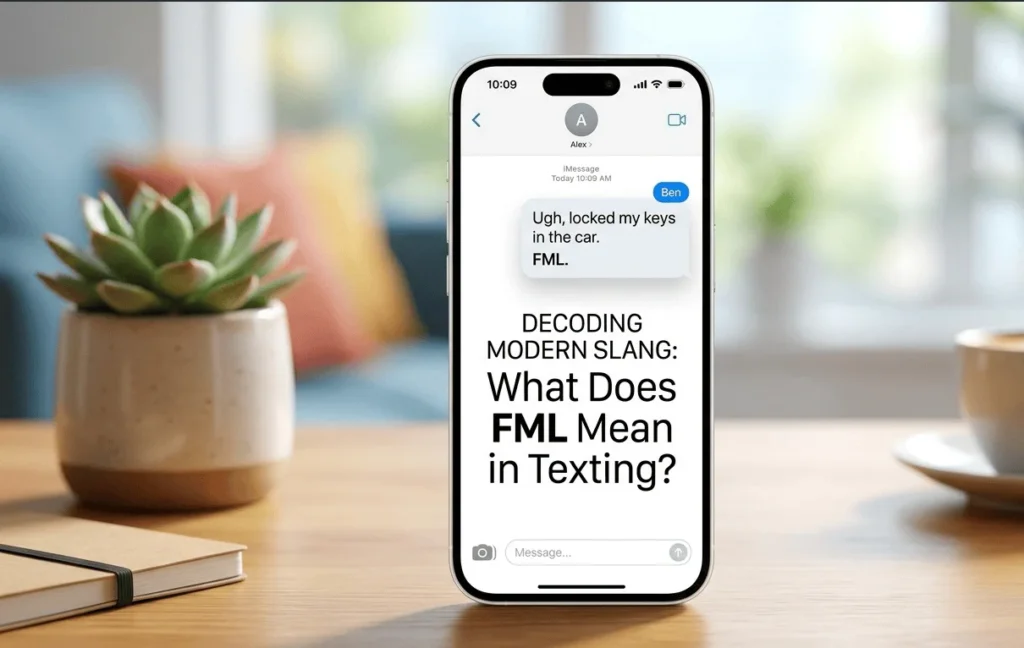
“Locked my keys inside the car while it was still running. fml modern life is tough.”
Origin & Background of FML
Where It Came From
Long before smartphones dominated our hands, internet message boards and early chatrooms of the late 1990s were the breeding grounds for text abbreviations. FML emerged alongside classics like LOL and BRB as standard shorthand to save typing time on limited keypads.
The FML Website Era
The slang achieved legendary pop-culture status in the late 2000s with the rise of the iconic website FMyLife. On this platform, users submitted short, true stories detailing their daily misfortunes, always ending their posts with the classic phrase. It turned shared misery into collective entertainment.
Evolution Over Time
Over the past two decades, the acronym transitioned from an explicit rant into a casual conversational standard. Today, its edge has softened slightly in digital spaces, evolving into a relatable way to acknowledge life’s chaotic moments.
Real-Life Conversations
Example 1: WhatsApp Group Chat
Maya: Hey guys, are we still meeting at 6 PM?
Liam: I wish. My boss just dumped three hours of emergency paperwork on my desk. fml 😭
Maya: Oh no! We’ll save some pizza for you.
Example 2: Instagram DMs
Elena: Did you get those concert tickets?
Noah: They sold out in 4 seconds while my page was loading. FML.
Elena: No way! That is terrible luck.
Example 3: TikTok Comments
UserA: Spent $200 on skincare only to realize I’m allergic to the main ingredient. fml 💀
UserB: The way I would cry! Hope your skin recovers quickly!
Example 4: Direct Text Message
Chloe: Please tell me you picked up the groceries?
Sam: I walked all the way home, opened the fridge, and realized I left the bag at the register… fml
Chloe: LOL, turn around! I’ll go with you this time.
Emotional & Psychological Meaning
What Emotion It Expresses
Using this slang is an act of quick emotional release. It captures feelings of helplessness, exasperation, temporary defeat, and humorous self-pity. Instead of holding in frustration, typing those three letters lets a person blow off immediate steam.
Why People Use It
Humans naturally seek validation when things go wrong. Texting this phrase signals to others: “I need a moment of empathy right now.” It builds instant rapport because everyone understands the sudden sting of bad luck.
What It Reveals About Modern Communication
Modern digital communication heavily relies on emotional shorthand. Because tone of voice and facial expressions are absent in text, acronyms act as emotional markers to bridge the physical gap between speakers.
A Real-World Example:
A few weeks ago, I stepped off a train, completely confident I was on my way to a quiet weekend getaway, only to realize I had boarded the express train going in the absolute opposite direction. Standing on a cold, unfamiliar platform miles away from my destination, sending a simple “boarded the wrong train fml” to my partner was the fastest way to turn absolute annoyance into a shared laugh.
Usage in Different Contexts
Social Media
On platforms like TikTok, X (formerly Twitter), and Instagram, users attach the phrase to funny videos or posts showcasing minor disasters. It serves as a digital badge of relatability.
Friends & Relationships
Among close peers, it is a safe, comfortable expression. Friends use it constantly to share minor daily fails without sounding overly serious or demanding too much attention.
Professional & Work Settings
Do not use it at work. Because of its explicit root words, sending this acronym to a boss, client, or colleague in a professional email or Slack channel is widely considered unprofessional and inappropriate.
Casual vs. Serious Tone
The key to understanding the acronym lies in reading the situation. If used over a burnt slice of toast, it is casual and humorous. However, if paired with news of a major life crisis, it indicates genuine emotional distress.
When NOT to Use It
High-Stakes Professional Environments
Avoid using explicit slang during job interviews, formal emails, or team meetings. It can hurt your professional reputation and make you appear immature.
Severe Crises or Tragedies
Using lighthearted slang during serious medical emergencies, natural disasters, or profound personal grief can come across as insensitive, dismissive, or wildly out of touch.
Cultural & Generational Sensitivity
Older generations or individuals unfamiliar with internet slang may interpret the explicit root words literally and take offense. Always know your audience before hitting send.
Common Misunderstandings
Literal vs. Figurative Meaning
The most common mistake is taking the phrase literally. When someone texts this slang, they almost never mean they despise their entire existence. It is almost always a hyperbolic, exaggerated response to a temporary inconvenience.
Misreading the Tone
Because text lacks vocal tone, people sometimes confuse playful self-deprecation with severe depression. Looking at contextual clues—such as accompanying emojis like 💀 or 😭—helps clarify the sender’s true intent.
Comparison Table
| Term / Expression | Full Meaning | Tone / Vibe | Best Used For |
| FML | Fuck My Life | Defeated, Frustrated, Dramatic | Minor to moderate life fails |
| SMH | Shaking My Head | Disappointed, Disbelieving | Judgment of foolish behavior |
| TBH | To Be Honest | Candid, Direct | Sharing authentic opinions |
| KML | Killing Myself Laughing | Overjoyed, Amused | Extremely funny situations |
| GG | Good Game | Resigned, Accepting | Giving up gracefully |
Key Insight
Understanding these subtle shifts in internet slang prevents embarrassing social miscommunications. Selecting the right acronym ensures your exact emotional state carries over perfectly in text messages.
Variations & Types
1. fml (Lowercase)
- Meaning: Mild annoyance.
- Explanation: Used for tiny daily inconveniences like dropping a pen or running late by two minutes.
2. FML (Uppercase)
- Meaning: High frustration or dramatic flair.
- Explanation: Used when something goes significantly wrong, like missing a flight or ruining dinner.
3. fml real
- Meaning: Genuine validation of bad luck.
- Explanation: Often used as a reply to confirm that a situation truly sucks.
4. fml moment
- Meaning: A specific event defined by bad luck.
- Explanation: Describing a situation that belongs in a hall of fame for unfortunate incidents.
5. fml vibes
- Meaning: An overall feeling of gloom or irritation.
- Explanation: Used to describe a day where nothing seems to go right from the start.
6. fml endless
- Meaning: Ongoing, relentless inconvenience.
- Explanation: Expresses exhaustion when bad events happen back-to-back without a break.
7. fml forever
- Meaning: Dramatic exaggeration of eternal bad luck.
- Explanation: A playful way to express that you feel permanently cursed by small misadventures.
8. fml life is hard
- Meaning: Mild existential venting.
- Explanation: Blends playful complaining with a soft acceptance of adult responsibilities.
How to Respond When Someone Uses It
Casual Replies
- “Oh no! What happened now?”
- “Classic! Hope your day gets better.”
- “Ah, that is the worst feeling ever!”
Funny Replies
- “Should I order pizza to mourn your loss?”
- “Sending thoughts, prayers, and extra coffee your way!”
- “Look on the bright side… at least you got a good story out of it!”
Mature & Empathetic Replies
- “I am so sorry you are dealing with that right now. Let me know if you need help.”
- “That sounds really overwhelming. Take a breather!”
- “That really sucks, but I know you’ll handle it smoothly.”
Respectful Replies
- “Hoping things turn around for you soon!”
- “Hang in there!”
Regional & Cultural Usage
Western Culture
In North America, the UK, and Australia, the phrase is a standard element of daily digital communication. It is widely understood across high school students, college campuses, and young adults.
Asian Culture
In many Asian nations where English is a secondary language, youth adopt the term through global pop culture and social media. However, it is used almost exclusively in casual digital spaces rather than spoken conversations.
Middle Eastern Culture
Across English-speaking circles in the Middle East, internet slang is common on apps like Instagram and WhatsApp. However, due to cultural standards regarding explicit language, users generally keep it confined to close, trusted friend groups.
Generational Differences: Gen Z vs. Millennials
- Millennials: Adopted the term during its original website golden age. They tend to use it for direct, explicit complaints about work, bills, and adult responsibilities.
- Gen Z: Uses the term layered with post-ironic humor, often combining it with self-deprecating emojis like the skull (💀) or crying face (😭) to turn frustration into a shared meme.
Is It Safe for Kids?
Parents should know that while the phrase is incredibly common, it does contain explicit language (the F-word).
It is generally not suitable for young children. Pre-teens and teenagers frequently encounter it online, where it is usually harmless venting rather than a sign of genuine danger. However, open conversations about digital etiquette can help teens understand where and when explicit acronyms are appropriate to use.
If you are exploring the deeper significance behind modern phrases, names, and communication trends, exploring resources like Name Meaning Zone can offer fascinating insights into cultural terms and identity.
FAQs
What does FML mean in texting?
It stands for “Fuck My Life,” a popular slang term used in texts and social media to express frustration, disappointment, or embarrassment over bad luck.
Is FML rude or offensive?
It contains strong language, making it vulgar in formal settings. However, among friends, it is widely accepted as casual venting rather than a direct insult to anyone.
Can I use FML at work?
No, you should avoid using it in professional settings due to its explicit nature. Stick to professional phrasing like “That is unfortunate” or “We hit a setback.”
Does FML always mean someone is depressed?
No, it is almost always used hyperbolically to express temporary irritation over minor everyday issues, like spilling a drink or losing a key.
What is the difference between FML and SMH?
FML focuses on your own personal bad luck or mistakes, whereas SMH (“Shaking My Head”) expresses disappointment or disapproval toward someone else’s actions.
Final Thoughts
Language is constantly adapting to fit our fast-paced modern lives. Acronyms like FML act as emotional release valves, allowing us to package complex feelings of frustration, embarrassment, and humor into three simple letters.
Understanding these digital nuances keeps your online conversations authentic, empathetic, and engaging. The next time life throws a minor curveball your way, you’ll know exactly how to decode the message—and how to respond with confidence. For authoritative guidelines on digital literacy and online communication standards, you can always check trusted educational resources like Merriam-Webster.