Decoding the Texting Mystery: What Does PU Mean?
Ever opened a text message, saw two simple letters—”PU”—and immediately paused to figure out what the sender meant? You are certainly not alone in this experience. Digital slang evolves at a blistering pace, leaving even experienced communicators checking urban dictionaries to keep up with short-form acronyms.
Texting acronyms exist to make rapid online communication effortless, saving keystrokes while capturing vivid human emotions. Understanding these shorthand terms helps bridge digital communication gaps, preventing awkward misunderstandings across group chats, direct messages, and social media feeds.
When you master modern slang, you gain instant confidence in navigating casual online spaces. Let us break down precisely what this two-letter abbreviation signifies, how it originated, and how you can use it naturally in your daily messages.
PU Slang Meaning: Quick Definition and Examples
Quick Meaning of PU
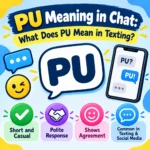
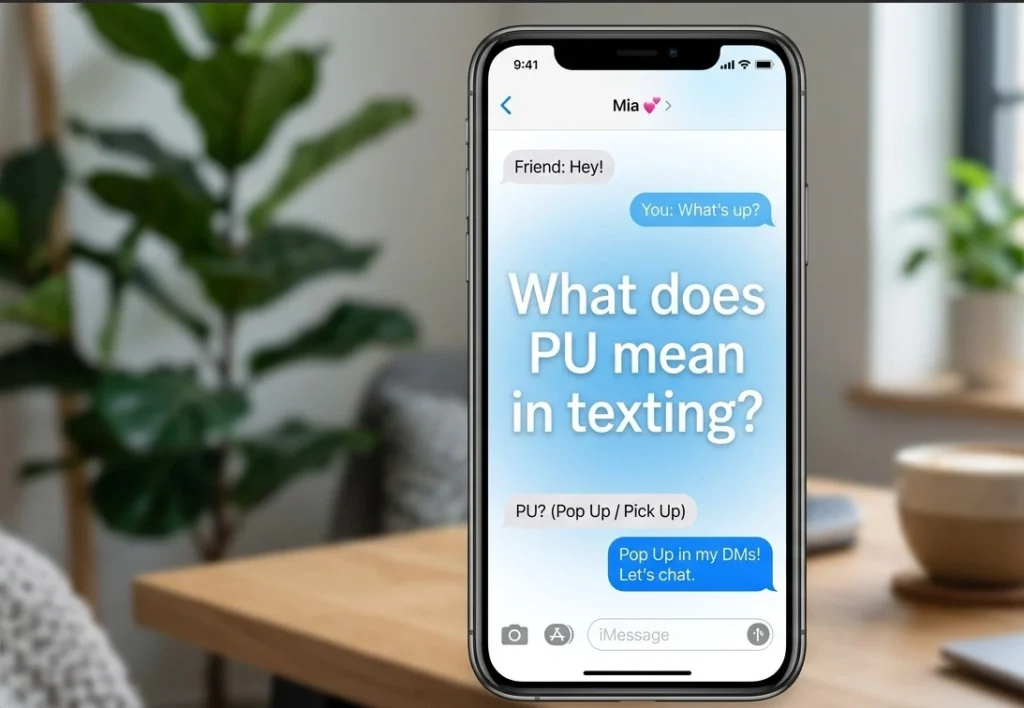
In online messaging and informal texting, PU primarily stands for “Pop Up.” It serves as an invitation or request for someone to message you privately, open a direct message (DM), or initiate a video or audio call.
In specific casual contexts, PU can also represent an exclamation reacting to an unpleasant smell (literally pronounced “P.U.!”), or function as shorthand for “Pick Up” (as in picking up a phone call or gathering items).
- “Hey, bored right now. PU on Insta!”
- “Did you see my story? PU if you want to hang out tonight.”
- “PU, I need to tell you what happened at work today!”
Primary Texting Definitions
The acronym carries three primary meanings depending on the context of your chat conversation:
- Pop Up (Most Common): A prompt asking the recipient to message or call immediately.
- Pick Up: A directive telling someone to answer an incoming phone call.
- Exclamation of Stench: A phonetic representation of reacting to something foul-smelling.
Origin and Background of PU Slang
Where the Term Originated
The phrase “pop up” originated in the early days of desktop instant messaging systems like AOL Instant Messenger (AIM) and MSN Messenger. Back then, a new notification window would literally “pop up” on your computer screen when a contact sent a private message.
As mobile communication shifted from traditional SMS to app-based platforms like Snapchat and Instagram, users condensed the phrase “pop up in my DMs” down to the minimal abbreviation “PU.”
Social Media and Generational Evolution
Snapchat played a massive role in popularizing the two-letter shortcut. Users frequently post stories featuring phrases like “PU for a chat” or “Bored, PU” to encourage followers to slide into their direct messages.
Gen Z internet culture embraces hyper-efficient typing styles. Shortening common conversational prompts from full sentences to two-letter acronyms keeps interactions fast, casual, and low-pressure.
Real-Life Conversations Using PU
Snapchat Story Interaction
Person A: Post on Story: “Late night thoughts… PU if you’re still awake 🌙”
Person B: Direct Message reply: “Hey! Saw your story, what’s on your mind?”
Instagram Direct Message
Person A: “That concert look incredible! Were you in the front row?”
Person B: “Yes! It was wild. PU on FaceTime, I’ll show you the videos.”
Casual WhatsApp Chat
Person A: “Are you free right now? Need a quick opinion on this outfit.”
Person B: “Yeah, PU! Let me see.”
iMessage Text Exchange
Person A: “I’m outside your apartment building.”
Person B: “Alright, PU the phone so I can buzz you in!”
Emotional and Psychological Meaning Behind PU
The Desire for Connection
Using “PU” signals an opening of a personal boundary in a lighthearted, inviting way. It turns a broadcasted public post into an invitation for private, one-on-one connection.
Psychologically, asking someone to “pop up” creates a low-stakes social dynamic. It expresses a desire for interaction without forcing a formal or heavy conversation.
Personal Communication Scenario
I remember posting a quick photo on my story after moving to a new city, adding “Bored in the new apartment, PU!” Within minutes, an old college friend reached out who happened to live just three blocks away. That simple two-letter prompt transformed a quiet evening into a warm reunion, proving how effective minimal slang can be at sparking real human connection.
How PU Changes Across Different Contexts
Social Media Feeds and Stories
On platforms like TikTok, Snapchat, and Instagram, “PU” is almost exclusively used to drive engagement. Users post it on public stories to encourage friends or followers to start private messaging threads.
Friendships and Dating Relationships
In casual friendships, “PU” signals availability and openness to chat. In romantic or flirtatious contexts, telling someone to “pop up” acts as a subtle, playful invitation to initiate private contact.
Professional and Workplace Settings
“PU” is far too casual for professional emails, Slack channels, or corporate communication. Using short slang like this in workplace settings can come across as unprofessional or overly familiar.
| Environment | Appropriateness Level | Recommended Alternative |
| Snapchat / TikTok | High | “PU” / “Slide in DMs” |
| Texting Friends | High | “Hit me up” / “Text me” |
| Workplace / Slack | Low | “Please reach out” / “Message me” |
| Professional Email | Unacceptable | “Feel free to contact me” |
When You Should Avoid Using PU
Formal Communication Environments
Never use “PU” when contacting supervisors, clients, professors, or professional contacts. Formal settings require complete sentences and clear, polite language to maintain professionalism.
Serious or Crisis Conversations
If a friend or family member is sharing sensitive, sad, or serious news, responding with short slang like “PU” feels dismissive and emotionally unsupportive. Match the emotional tone of the speaker with thoughtful words.
Potential Misunderstandings
Because “PU” can mean “Pop Up,” “Pick Up,” or express disgust at a bad smell, check your sentence context before hitting send to ensure your true intention comes across clearly.
Common Misunderstandings About PU
Confusing “Pop Up” with Expressing Disgust
The most common point of confusion occurs when older readers interpret “PU” as the vocal sound made when smelling something terrible. Context usually resolves this immediately; if someone writes “PU, I’m bored,” they mean “pop up,” not that they smell bad.
Misinterpreting the Sender’s Intent
Receiving a simple “PU” prompt does not always mean the sender has urgent news. Often, it simply means they are looking for casual entertainment or lightweight conversation to pass the time.
Comparing PU with Related Slang Terms
| Slang Term | Core Meaning | Tone & Style | Context |
| PU | Pop Up / Pick Up | Modern, ultra-casual | Stories, short texts |
| HMU | Hit Me Up | Classic casual | Texts, social posts |
| DM Me | Direct Message Me | Clear, direct | Public profiles, social media |
| WYD | What You Doing? | Conversation starter | Casual messaging |
Key Insight
While “HMU” (Hit Me Up) and “DM Me” express similar requests, “PU” carries an extra layer of spontaneous, informal energy specific to modern mobile-first messaging apps.
Variations and Related Texting Acronyms
Common Texting Variations
- PU: Pop up (Message privately).
- HMU: Hit me up (Contact me later).
- PM: Private message (Send a direct message).
- DM: Direct message (Platform-specific private note).
- TBY: Text back you (Reply when free).
- LMK: Let me know (Keep me updated).
- WUA: What you up to? (Checking availability).
- HBY: How about you? (Returning a question).
- WYD: What you doing? (Starting a chat).
- TBH: To be honest (Sharing frank thoughts).
Smart Ways to Respond When Someone Texts PU
Casual Responses
- “Hey! Just saw your text, what’s going on?”
- “Popping up! How is your day going?”
- “Free right now, what are you up to?”
Playful or Funny Responses
- “You called for me? Here I am!”
- “Popped up like a notification. What’s the news?”
- “I have arrived! What are we talking about?”
Direct and Respectful Responses
- “Hey there, happy to chat. Is everything okay?”
- “Just finished up work! Give me ten minutes and I’ll call you.”
- “Hey! I’m a bit busy right now, but I will text you later tonight.”
Regional and Cultural Usage Differences
Western Digital Culture
In North America and Europe, “PU” is widely recognized among Gen Z and younger Millennials who frequently use Snapchat and Instagram for daily communication.
Global Internet Community
Across international communities where English is spoken as a secondary language, fuller abbreviations like “DM” or “PM” remain far more common and recognizable than “PU.”
Generational Divide
Older generations typically associate “PU” exclusively with the exclamation for bad odor or physical pick-up requests, whereas younger digital natives instinctively interpret it as “Pop Up.”
Is the Term Safe for Younger Users?
Yes, “PU” is completely benign slang. It contains no inappropriate, explicit, or offensive language.
Parents monitoring online conversations can rest assured that “PU” simply represents standard digital shorthand for asking someone to send a message or answer a call.
Frequently Asked Questions About PU in Texting
What does PU mean in Snapchat messages?
On Snapchat, “PU” almost always stands for “Pop Up,” asking users to send a private direct message or start a chat.
Can PU mean pick up the phone?
Yes, in phone-call contexts, “PU” stands for “Pick Up,” asking the recipient to answer an incoming phone or video call.
Is PU short for pop up or pick up?
It stands for both, but “Pop Up” is the dominant meaning in modern text messaging and social media posts.
Is PU an appropriate term to use at work?
No, you should avoid using short slang like “PU” in professional emails or business messages; use clear phrasing like “please message me” instead.
Why do people say PU when something smells bad?
Phonetically, “P.U.” imitates the sound people make when holding their nose around an unpleasant odor, which evolved into a common spoken slang expression.
Final Thoughts on Navigating Modern Texting Slang
Understanding modern texting slang like “PU” helps you stay connected, confident, and clear in digital conversations. Language naturally evolves to match our modern communication habits, and embracing these updates keeps your interactions smooth and authentic across every platform.
For a deeper look into the history and structure of digital acronyms, check out the comprehensive overview of text messaging shorthand on Wikipedia. You can also explore our detailed guide on decoding modern online expressions to keep your digital vocabulary sharp and up to date.
Next time you see “PU” on a story or in a chat, you will know exactly what it means—and precisely how to respond!