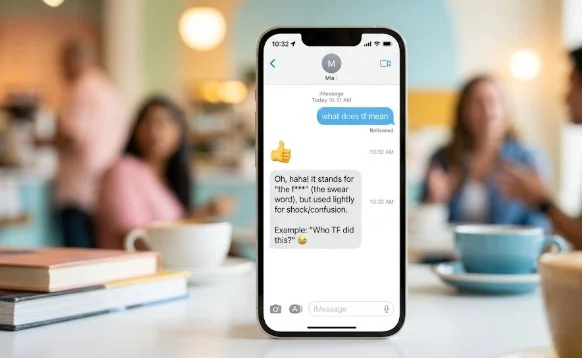
Decoding “TY”: What Does It Mean and Why Do We Search It?
If you have ever stared at your phone after getting a swift two-letter text and wondered if the sender was being genuine, lazy, or just plain efficient, you are not alone. Millions of people type this exact query into search bars every day because modern digital slang moves at lightning speed.
We search for these terms because text-based messaging strip away voice tone, body language, and facial expressions. A simple two-letter abbreviation can leave you guessing about the emotional intent behind the message.
Understanding short forms like this helps bridge the gap between digital brevity and real human connection. It eliminates awkward misinterpretations and helps you reply with confidence whether you are texting a close friend, a crush, or a coworker.
TY – Quick Meaning
At its core, TY is one of the oldest, simplest, and most widely used internet acronyms in existence.
- Primary Definition: TY stands for “Thank You.”
- Primary Function: It is used as a quick, informal way to express gratitude or acknowledge a favor in text messages, gaming lobbies, and social media comments.
- Tone: Casual, fast, friendly, and efficient.
“Hey, I dropped off your notebook on your desk!” — “Aw ty so much! You are a lifesaver!”
“Your hair looks amazing in that photo!” — “Ty!! ❤️”
“Can you send me the link for that recipe?” — “Sent!” — “Ty!”
Origin & Background
Where It Came From
Before smartphones with predictive text existed, typing required tapping a numeric keypad multiple times just to produce a single letter. To save time, character limits, and effort, early internet users on IRC (Internet Relay Chat) networks and SMS platforms in the late 1990s began shortening common polite phrases.
Cultural Influence and Social Media Impact
As platforms like AIM, MSN Messenger, and eventually Twitter emerged, short-form acronyms became built-in features of internet culture. The character restrictions on early Twitter (140 characters) accelerated the adoption of short forms across every demographic.
How the Meaning Has Evolved
While it originally served purely as a time-saving keyboard shortcut, today it carries distinct social nuances. In fast-paced online spaces—like multiplayer video games where typing long sentences gets you eliminated—it remains essential. However, in personal text conversations, its usage now signals different levels of closeness or casualness depending on punctuation and capitalization.
Real-Life Conversations
WhatsApp Chat Between Friends
Maya: Hey! I made extra iced coffee this morning, want me to bring you one?
Liam: Omgg yes please! You are the best! ☕
Maya: Leaving now, see you in 10!
Liam: Ty! See ya!
Instagram DM Between Acquaintances
Sarah: Loved your recent reel on digital photography tips! Super helpful breakdown.
Alex: Hey Sarah! Ty, really appreciate you taking the time to watch it! ✨
Sarah: Keep them coming!
TikTok Comment Section
User_99: What song is playing in the background of this video??
Creator: It’s “Midnight City” by M83!
User_99: ty artist is so good 🙏
iMessage Between Siblings
Jordan: Left your laptop charger on the kitchen counter so you wouldn’t forget it.
Taylor: ty
Jordan: You’re welcome, lazy head.
Emotional & Psychological Meaning
What Emotion It Expresses
At its heart, it expresses appreciation, but the degree of emotional depth varies drastically based on context. It provides a quick burst of warmth without forcing a heavy, formal interaction.
Why People Use It
Psychologically, modern messaging is designed around low-effort, high-speed exchange. Using abbreviations allows people to acknowledge someone’s action immediately without pausing their current real-world activity. It satisfies our social need for politeness while respecting our limited attention spans.
What It Reveals About Modern Communication
It shows that human etiquette adapts to technology. We do not throw politeness out the window online; rather, we compress it. However, because it is so abbreviated, it can sometimes feel transactional if used in heavy emotional situations.
A Real-Life Scenario
Last week, a colleague sent me a detailed critique of a project draft I had spent hours refining. Instead of sending a short “ty,” I replied with a thoughtful voice note expressing deep appreciation. Later that afternoon, when that same colleague simply dropped a link to a helpful article, I texted back, “ty! reading this now.” Knowing when to use short forms versus full words is the secret to building authentic digital relationships. You can explore more linguistic breakdowns and name origins atName Meaning Zoneto better understand personal communication styles.
Usage in Different Contexts
Social Media Platforms
On TikTok, Instagram, X (Twitter), and YouTube, it is standard language. You will see creators using it in comment sections to acknowledge thousands of fan compliments quickly without typing full sentences repeatedly.
Friends & Romantic Relationships
Among close friends, it is completely acceptable. However, in romantic contexts, typing just lowercase letters without emojis can sometimes come across as cold or distant. Adding an exclamation point or heart emoji instantly restores warmth.
Work & Professional Settings
It is best to avoid abbreviations in formal emails or interactions with clients. However, on quick internal team chat apps like Slack or Microsoft Teams, sending a quick acknowledgment to a peer is generally acceptable in modern workplace cultures.
Casual vs. Serious Tone
- Casual: Perfect for small favors, compliment replies, and fast exchanges.
- Serious: Avoid using it for major favors, emotional support, or heartfelt apologies. In those cases, write out “Thank you so much.”
When NOT to Use It
Inappropriate Contexts
Never use abbreviations during formal job interviews, professional cover letters, legal correspondence, or condolences. Texting a short form to someone who just expressed sympathy can feel dismissive and hurtful.
Cultural Sensitivity and Misunderstandings
Older generations or non-native English speakers who did not grow up with internet slang might view short forms as lazy or rude. When communicating across generational gaps, taking three extra seconds to spell out full words prevents unnecessary friction.
Common Misunderstandings
The Low-Effort Misconception
People often assume that using short forms means the sender does not care. In reality, most users send short acknowledgments simply because they are multitasking or on the go, not because they lack appreciation.
Capitalization and Punctuation Matter
- “TY!” — Enthusiastic, genuine, upbeat.
- “ty” — Fast, passive, neutral.
- “ty.” — Can feel passive-aggressive or cold depending on the chat tone.
Comparison Table
| Term / Slang | Meaning | Tone | Best Used For |
| TY | Thank You | Casual / Fast | Quick favours, online chats, casual texts |
| THX | Thanks | Relaxed / Friendly | Informal messages among peers |
| TYSM | Thank You So Much | Warm / Expressive | Meaningful favors, deep appreciation |
| NVM | Never Mind | Opposite/Shift | Canceling a request or changing topics |
| NP | No Problem | Complementary | Responding to someone saying thanks |
Key Insight
Digital short forms exist on a spectrum of emotional effort. Matching your response style to the depth of the favor ensures your true intentions are never lost in translation.
Variations & Types
1. TYSM
- Meaning: Thank You So Much.
- Expresses a stronger layer of enthusiasm and genuine gratitude than the basic form.
2. TYVM
- Meaning: Thank You Very Much.
- Slightly more traditional, often used when keeping things polite yet informal.
3. TYIA
- Meaning: Thank You In Advance.
- Commonly used in workplace chats or group messages when making a request.
4. TYSMM
- Meaning: Thank You So So Much.
- An extra letter added for dramatic emotional emphasis among close friends.
5. TYSF
- Meaning: Thank You So Frequently.
- Used sarcastically or playfully when someone repeats a helpful action.
6. Pls Ty
- Meaning: Please, Thank You.
- Used when asking for a quick task to be completed politely.
7. Ty ❤️
- Meaning: Thank You (with love).
- Converts a brief shortcut into an affectionate, warm personal response.
8. Ty!!
- Meaning: Enthusiastic Gratitude.
- Multiple exclamation points instantly eliminate any perceived coldness.
How to Respond When Someone Uses It
Casual Replies
- “No problem at all!”
- “Anytime!”
- “You got it! 👍”
Funny Replies
- “You’re welcome! That’ll be $5 please 😉”
- “Don’t mention it… seriously, don’t, or everyone will want one!”
- “Just doing my civic duty 🫡”
Mature Replies
- “Glad I could help out!”
- “Happy to assist whenever you need.”
- “Always happy to lend a hand.”
Respectful Replies
- “You are very welcome!”
- “My absolute pleasure.”
- “Anytime you need support, just let me know.”
Regional & Cultural Usage
Western Culture
In North America, Europe, and Australia, short-form texting is deeply embedded in everyday culture. It is viewed as standard casual communication across almost all age brackets under 45.
Asian Culture
In many Asian cultures where high-context politeness and formal hierarchy are central to communication, English acronyms are used heavily in gaming and student groups, but full formal phrasing remains preferred in professional or intergenerational settings.
Middle Eastern Culture
Internet slang is widely adopted by youth in urban centers alongside native Arabic digital shortcuts. It frequently appears alongside emojis to balance brevity with warmth.
Generational Differences: Gen Z vs. Millennials
- Millennials: Tend to use proper capitalization (“Ty!”) and often pair it with emojis to ensure their friendliness is clear.
- Gen Z: Frequently uses all-lowercase (“ty”) as a stylistic choice. For Gen Z, lowercasing feels relaxed and unpretentious, whereas all-caps can sometimes feel overly energetic or sarcastic.
Is It Safe for Kids?
Yes, it is completely safe for children and teens to use. It contains no inappropriate, vulgar, or harmful double meanings. Parents can rest easy knowing it is simply a practical keyboard shortcut for basic politeness.
Frequently Asked Questions
Is TY considered rude in texting?
It is not inherently rude, but context matters. Texting it to a close friend for a small favor is completely normal, but using it in response to a major, thoughtful favor can feel a bit dismissive.
What is the difference between THX and TY?
Both mean essentially the same thing. THX shortens “Thanks,” while TY shortens “Thank You.” TY is often perceived as slightly softer and more polite.
Can I use TY in work emails?
It is best to avoid it in formal work emails. However, sending it in quick internal chat platforms like Slack or Teams is generally acceptable among peers.
What does TYIA mean?
TYIA stands for “Thank You In Advance.” It is commonly used when asking a favor or requesting information before the recipient has fulfilled the request.
How do I make TY sound warmer in a text?
Add an exclamation point or an emoji (such as a heart, smile, or folded hands). Typing “ty!!” feels significantly warmer than typing a plain lowercase “ty.”
Final Thoughts
Language is an ever-evolving tool designed to serve human connection, and internet shortcuts are simply the modern evolution of how we share appreciation. While two letters might seem small on a phone screen, the intention behind them still carries real human value.
The key to mastering modern texting etiquette isn’t avoiding shortcuts altogether—it is knowing when to use them. Use short forms for fast-paced, casual moments, and save full sentences for moments that deserve deeper emotional reflection. If you enjoy learning about linguistic origins, personal naming histories, and cultural communication trends, check out the authoritative guides provided by Merriam-Webster’s Word Matters to keep your communication skills sharp and authentic.