Decoding the Slang: Why We Are All Searching for the Real Meaning of HMB
Step into the fast-paced world of social media, and you will quickly realize that language evolves at lightning speed. One minute you are mastering basic emojis, and the next, your inbox is filled with letter combinations that look more like an alphabet soup than an actual conversation.
If you have ever stared at an Instagram DM or a story caption with a blinking cursor, wondering exactly how to respond to a cryptic three-letter acronym, you are definitely not alone. Millions of users open their apps every day only to find themselves translating modern digital dialects.
The real challenge with online slang is that a single phrase can change its entire color based on who sends it and where it appears. On an app like Instagram, where visual context mixes with text, getting the tone right is everything to avoid awkward misunderstandings.
HMB – Quick Meaning
What Does HMB Mean?
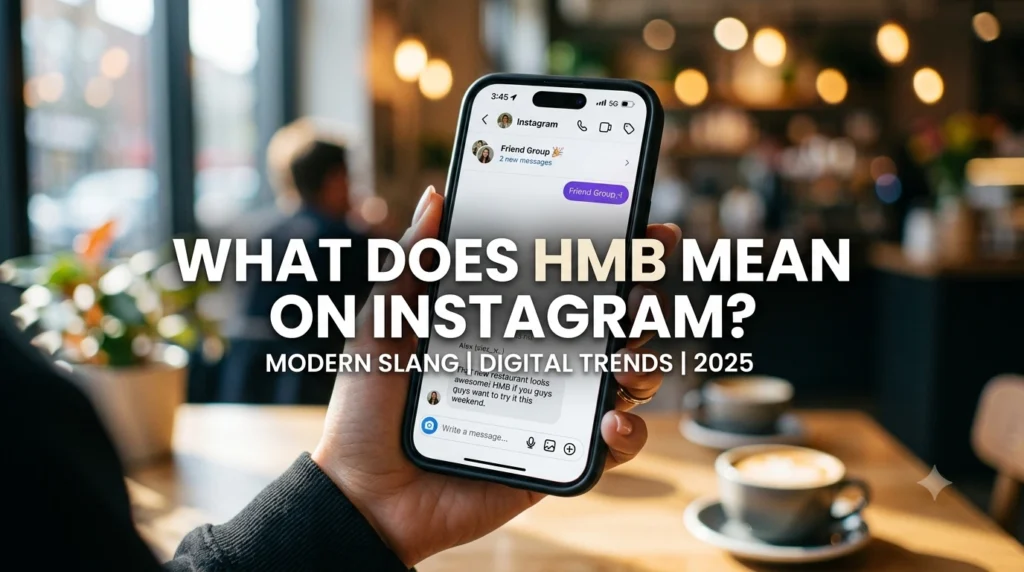
At its core, HMB most commonly stands for “Hit Me Back” when you are text-messaging or chatting in direct messages. It is a quick, casual invitation for someone to reply to your message, return a call, or continue a conversation when they are free.
However, Instagram is a visual platform driven by reels, stories, and viral trends, which introduces a major second meaning. In comment sections or on video captions, HMB frequently stands for “Hold My Beer,” a classic phrase used before someone attempts a wild, funny, or highly impressive stunt.
- “I’m heading out to that new coffee shop down the street, HMB if you want me to grab you a latte.”
- “You think that kickoff return was wild? HMB while I show you what happened during the final two minutes of the game.”
- “Just dropped the new style guide on the main page, HMB with your thoughts whenever you get a free second.”
Origin & Background
Where Did It Come From?
The roots of HMB as “Hit Me Back” trace back to the early days of cell phone texting and older chat rooms, where character limits forced everyone to abbreviate words. It was born out of pure convenience, saving precious seconds on numeric keypads before smartphones changed the game.
On the other hand, “Hold My Beer” has deep cultural roots in classic Southern humor and blue-collar jokes, long before the internet existed. It traditionally mocked a specific type of overconfident person who would hand their drink to a friend right before doing something incredibly risky.
Social Media Impact
When Instagram transitioned from a simple photo-sharing space into a hub for short-form video and instant messaging, both definitions found a perfect home. The app unified conversational shorthand with meme culture, allowing both expressions to thrive simultaneously across different features.
Over the years, the meaning has evolved from a lazy typing shortcut into a tool for emotional pacing. Today, typing these three letters signals that you want to keep things completely low-pressure, casual, and authentic without sounding demanding.
Real-Life Conversations
Instagram DMs
Person A: Hey! I finally watched that indie documentary you recommended last weekend.
Person B: Oh awesome! I’m heading into a long work meeting right now, but HMB with your favorite parts later!
WhatsApp Chat
Person A: Are we still on for checking out the food truck festival tomorrow afternoon?
Person B: Yeah, definitely down! I just need to check my work schedule tonight. HMB in an hour to confirm the timing.
TikTok Comments
Person A: This creator really thinks they just cooked the best homemade smash burger on this app lol.
Person B: Right? HMB while I fire up my flat top grill this evening and show everyone how it’s actually done.
Text Messages
Person A: Yo, I left my favorite denim jacket at your apartment after the watch party last night.
Person B: Found it on the couch! I’m out running errands right now, so HMB around 6 PM and you can come swing by to grab it.
Emotional & Psychological Meaning
What Emotion It Expresses
Using shorthand in online spaces is rarely just about saving time; it is deeply tied to our desire for social acceptance and belonging. When you tell someone to “hit me back,” you are expressing a genuine desire for connection while intentionally stripping away any heavy expectations.
It serves as a linguistic safety valve that protects our social ego from the vulnerability of putting ourselves out there. By keeping the invite incredibly casual, you signal to the other person that you value their time and aren’t trying to force a rushed interaction.
A Personal Scenario
A few months ago, I wanted to check in on an old college friend who had been going through an incredibly stressful career transition. I didn’t want to overwhelm her with a massive paragraph that felt like another obligation on her massive to-do list.
Instead, I sent a quick photo of our old campus hangout spot on my Instagram story and sent it straight to her DMs. I added a simple note: “Thinking of you! No pressure at all, but HMB whenever life settles down a bit.”
The response I got a few days later was incredibly warm. She told me that the tiny acronym made her feel remembered without making her feel guilty for not replying instantly, proving how powerful casual language can be.
Usage in Different Contexts
Social Media
On Instagram Stories and Reels, context dictates everything. If you see a fitness influencer posting a mind-bending acrobatic stunt with “HMB” in the caption, they are definitely using the “Hold My Beer” meme format to engage their audience.
If you see it in an interactive poll or a question box, it is a direct call to action asking followers to send a message. Understanding this boundary keeps you from misinterpreting a creator’s intent.
Friends & Relationships
Among close friends, it functions as a comfortable rhythm keeper that shows you are in sync. It is a seamless way to leave a conversation open-ended without the awkwardness of a formal goodbye or an abrupt ending.
In early dating stages, it keeps your energy light and approachable. It allows you to suggest a plan or share a funny meme without appearing overly eager, maintaining a healthy, balanced dynamic.
Work & Professional Settings
This is the ultimate danger zone for internet slang. Using casual acronyms in a professional email or on a work platform like Slack can instantly make you look disorganized or indifferent to company standards.
If you are communicating with a client or a supervisor, skip the abbreviations entirely. Stick to clear, polished phrases like “Please let me know your thoughts when you have a moment” to protect your professional reputation.
When NOT to Use It
Inappropriate Contexts
There are times when brevity is a sign of disrespect rather than convenience. Sending a three-letter acronym during a serious, emotionally charged conversation or after someone shares bad news can make you seem incredibly cold and dismissive.
If a friend sends a message about a tough breakup or a family loss, they deserve full, handwritten words of support. Using shortcuts in those moments signals that you can’t be bothered to type out a thoughtful sentence.
Cultural Sensitivity
Internet slang travels globally, but it doesn’t always translate cleanly across borders or different age demographics. Older generations or people who speak English as a second language might find these phrases highly confusing or misinterpret them completely.
Before dropping slang into a conversation, quickly read the room. If the person on the other end isn’t deeply immersed in internet culture, using standard English ensures your message doesn’t get lost in translation.
Common Misunderstandings
Tone Confusion
Because text completely lacks facial expressions and vocal inflections, it is incredibly easy for short messages to be misread. Someone might read “HMB” as a blunt, impatient demand for an immediate answer rather than the relaxed check-in you intended.
To avoid this, pairing the acronym with a friendly emoji can completely change how it lands in an inbox. A simple smiley face or a waving hand instantly restores the warm, friendly tone you want to project.
Literal vs. Figurative Meaning
The “Hold My Beer” variation is almost always used in a completely figurative sense online. Nobody expects you to literally hand over a physical beverage before making a funny comment or posting a video response.
It is simply a dramatic way to say, “Watch this, I am about to beat this challenge or prove a point.” Taking it literally can lead to some incredibly confusing exchanges in the comment section.
Comparison Table
The table below breaks down how HMB stacks up against other common pieces of internet slang you are bound to see while scrolling your feed.
| Slang Term | Core Meaning | Primary Context | Tone / Energy |
| HMB | Hit Me Back / Hold My Beer | DMs, Reels, Stories | Casual, inviting, or confident |
| BRB | Be Right Back | Active text conversations | Informative, temporary pause |
| HMU | Hit Me Up | Public posts, invitations | Open-ended, initiating a link-up |
| LMK | Let Me Know | Casual updates, planning | Considerate, organized, low-key |
| WYD | What You Doing? | Conversation starters | Direct, informal, curious |
Key Insight
Choosing the Right Word
While all of these terms keep our digital communication moving quickly, picking the exact right one depends entirely on whether you are asking someone to take action now or leaving the door open for later.
Variations & Types
Digital dialects are incredibly flexible, and users constantly tweak expressions to fit their exact mood. Here are the most common variations of HMB you will run into across different social platforms:
- HMU (Hit Me Up): An open invitation for anyone to reach out to you, usually posted publicly on a story.
- HMU Next Time: A gentle request for someone to include you in their future social plans or outings.
- HMB ASAP: A slightly more urgent version of hit me back, used when you need an answer relatively quickly.
- Hold My Juice Box: A hilarious, G-rated version of hold my beer used when kids or wholesome accounts do something impressive.
- Hold My Cosmopolitan: A stylized variation used in fashion or luxury spaces to inject a bit of high-energy drama.
- HMB Later: A relaxed sign-off telling someone they can reply whenever they finally get around to it.
- HMBU (Hit Me Back Up): A double-layered variation asking someone to reconnect after an event finishes.
- Hold My Tea: A British or tea-culture variation used right before dropping a massive, undeniable truth bomb.
- HMB When Free: The ultimate low-pressure message explicitly stating there is absolutely no rush to respond.
How to Respond When Someone Uses It
Casual Replies
If a close friend hits you with a quick check-in, keep your energy exactly where theirs is. A simple, “Hey! Just got home, what’s up?” or “Will do, give me twenty minutes to wrap this up!” keeps the conversation rolling smoothly.
Funny Replies
When someone uses the meme version before attempting something wild, match their humor. You can respond with comments like, “I’m holding it, but you better not fail this!” or “Standing by, please don’t end up in the emergency room.”
Mature Replies
If the message comes from a partner or a close colleague discussing an important matter, show that you take their time seriously. Respond with a clear timeline: “I’ll review those details and hit you back by tomorrow morning.”
Respectful Replies
When someone gives you space by using a low-pressure variation, acknowledge their thoughtfulness.
Regional & Cultural Usage
Western Culture
In the US, UK, and Canada, HMB effortlessly jumps back and forth between its two main definitions depending entirely on the age group. It is heavily embedded in daily texting habits and forms the backbone of countless viral meme formats on TikTok and Instagram.
Global Internet Usage
In regions across Asia and the Middle East, English internet slang is widely adopted by younger, tech-savvy generations who use it to participate in global trends. However, local acronyms and cultural phrases usually dominate everyday personal messaging.
Generational Differences
The divide between Gen Z and Millennials often shows up in how they deploy these shortcuts. Millennials tend to use acronyms grammatically within full sentences, carefully punctuating their messages to ensure perfect clarity.
Gen Z, however, treats slang as an entirely stylistic choice, often typing in all lowercase and ignoring traditional punctuation to create an effortless aesthetic. To dive deeper into how modern naming conventions and cultural expressions shift across generations, checking out detailed guides on identity evolution via resources like Name Meaning Zone can offer fascinating linguistic context.
Is It Safe for Kids?
From a digital safety standpoint, HMB is completely benign and safe for teenagers and kids to use. It contains no hidden explicit meanings, dark double entendres, or predatory subtext that parents need to worry about.
The only real concern is the “Hold My Beer” variation, which occasionally appears on videos featuring dangerous physical stunts or reckless behavior. Parents should focus on ensuring their children understand online safety and physical boundaries rather than worrying about the letters themselves.
FAQs
Can HMB mean anything else besides “Hit Me Back” or “Hold My Beer”?
While those two are the undisputed kings of social media, in very specific niche circles like medical communities, it can stand for beta-hydroxy-beta-methylbutyrate, a popular bodybuilding supplement used for muscle preservation.
Is it rude to use HMB in an Instagram comment?
Not at all! Dropping it in a casual comment section is a great way to interact with creators, laugh at a meme, or match the high energy of a video, provided the content itself is lighthearted.
How do I know which definition someone means in a DM?
Look at the context of the conversation. If someone asks a question and ends with those letters, they mean “Hit Me Back.”
Can I use HMB in a professional text message to a coworker?
It is highly recommended to avoid it unless you and that specific coworker are incredibly close friends outside of the office. Keeping your professional text crisp and fully spelled out prevents any accidental slip in workplace authority, a point echoed in modern digital workspace communication studies by institutions like the Pew Research Center.
What is the difference between HMB and HMU?
The difference is all about direction. HMB (“Hit Me Back”) asks someone to reply to a conversation that has already started. HMU (“Hit Me Up”) is an open invite for someone to initiate a brand-new conversation or plan.
Final Thoughts
Language is beautiful because it is alive, constantly adapting to the ways we interact with our screens and each other. Abbreviations like HMB are not ruining our ability to talk; they are simply helping us build faster bridges in a hyper-connected world.
The secret to mastering digital communication is never about memorizing every single trend that pops up on your feed. It is about reading the room, honoring the emotional tone of your relationships, and choosing words that make people feel connected to you.
Go ahead and send that quick message, jump into that comment section, and navigate your feed with absolute confidence. The digital world moves incredibly fast, but once you master the nuance behind the letters, you hold the keys to the conversation.